29
Rokad Khata vs Bahi Khata: Which Cash Book Should Your Shop Keep?
Shopkeepers use “khata” for two different books, and mixing them up is why some shops never quite know where they stand. The rokad khata tells you what happened today. The bahi khata tells you who still owes you.
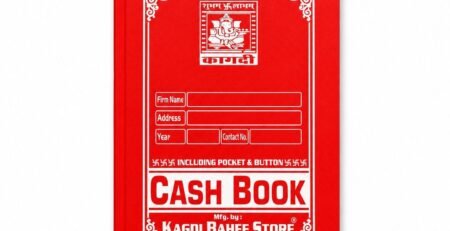
Rokad khata: the day book
Rokad is the daily record. Cash came in, cash went out, this is what is left. It is written in the order things happen, with no grouping and no cleverness:
- Opening cash in the drawer this morning
- Every sale, with the amount
- Every payment made — supplier, transport, tea, electricity
- Balance at closing
The value of a rokad book is that a single page answers one question: “did today go right?” You can close the shop at night, look at the balance, and know.
Bahi khata: the udhar book
The bahi khata is where credit lives. A customer takes goods today and pays on the tenth. That entry belongs in the bahi khata, under the customer’s name, not in the day book as if the money had already come in. A bahi khata holds:
- Customer or party name
- Date of the udhar
- Amount given on credit
- Date and amount of every payment received
- Running balance for that party
At month end you can total the bahi khata and see exactly how much money is sitting outside the shop. That number is the one most small shops cannot produce on demand.
Why both books are needed
If you only keep the bahi khata, the day’s cash is never reconciled — credit entries and cash sales get mixed and the drawer and the book stop agreeing. If you only keep the rokad, every udhar customer’s balance has to be remembered or hunted through pages.
Keep them apart and each one stays simple:
- Cash sale? Rokad khata.
- Credit sale? Bahi khata under the party name, and a note in the rokad that goods went out on credit.
- Payment received against old udhar? Bahi khata, on that party’s page, dated.
Single khata or nakal register?
A single khata has one set of pages: you write each entry once. A nakal register keeps a copy of what you wrote, so the customer keeps one copy and your book keeps the other. Shops that give written slips for every credit entry prefer the nakal format, because disputes are settled by the copy rather than by memory.
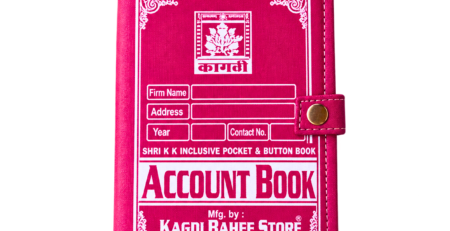
- Small shop, few udhar parties: a single khata is enough. The single khata 6 bhan size is made for a counter drawer.
- More daily entries: move up to a larger rokad. The single rokad 8 bhan gives wider pages for a busier counter.
- Written slips for customers: use a nakal register so every credit entry exists twice from the start.
Size, bhan and shelf space
Size decides comfort; bhan decides how long the book lasts. A 6-3/4 x 14 inch khata sits beside the billing machine and gets written all day. A 17 x 28 inch register is easier to read and total, but it wants a table. If you fill a book quickly, choose a higher bhan count instead of switching to a bigger book you have nowhere to keep.
Getting the habit started
The first page is the hardest. Write the opening cash, then simply write each entry as it happens for one week. Most shopkeepers find the rokad takes under a minute per entry once the book stays open on the counter.
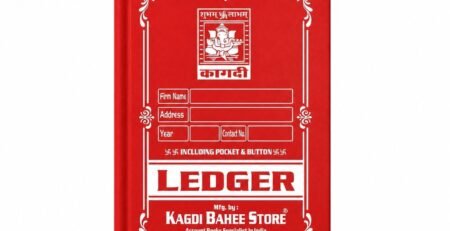
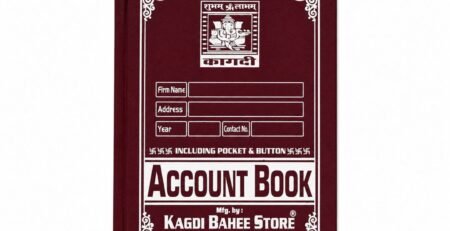
More on formats: bahi khata vs ledger book and the routine an accountant expects. Browse account books and khata registers to match a book to your counter.
In one line: rokad for today’s cash, bahi khata for who owes what — two thin books beat one thick confusing one.