29
Bahi Khata vs Ledger Book: Which One Does Your Shop Actually Need?
Walk into any shop in India and you will find at least one thick book behind the counter. Often there are two: a bahi khata and a ledger. They look similar, they are both ruled, and they are both used for accounts — but they do two different jobs. Buying the wrong one usually shows up months later, when the entries no longer add up.
What a bahi khata is
A bahi khata is the shop’s working book. Entries go in as they happen: today’s sales, cash paid out for tea and packing, an amount given on credit to a regular customer. It is written in the order the day happens, so a bahi khata reads like a diary of money moving in and out of the shop.
Because it is written at the counter, a bahi khata has to be quick to use. That is why these books are made with ruled columns and strong binding that survives being opened a hundred times a day.
What a ledger book is
A ledger is an organised book, not a running one. Instead of writing entries in the order they happen, you keep a page or a section for each customer, supplier or expense head, and post the amounts there. At the end of the month you can look at one page and know exactly how much a particular customer owes, or how much you spent on transport.
A ledger is slower to maintain, but it answers questions a rough daily book cannot.
The difference in one line
- Bahi khata: written daily, in date order, one entry after another.
- Ledger: written head-wise or name-wise, so each account can be read on its own.
- Bahi khata: the record of what happened today.
- Ledger: the record of what is still owed, earned or spent.
Which one should you buy?
If you sell mostly for cash and just want a dependable daily record, one good bahi khata is enough to start. If you give credit to regulars — the kirana shop, the tailor, the medical store all do — you need a ledger as well, because “who owes me what” is a question you will be asked every week.
Many shopkeepers keep both and treat them as a pair: the day’s work goes into the bahi khata, and once a week the credit entries are posted into the ledger. Nothing gets lost, and the yearly totals are ready when your accountant asks.
Choosing the book itself
Both books are sold in several sizes and finishes, so pick by where the book will live and how many entries you write in a day. A book that sits on the counter and never moves can be large; a book that travels in a bag should fit it.
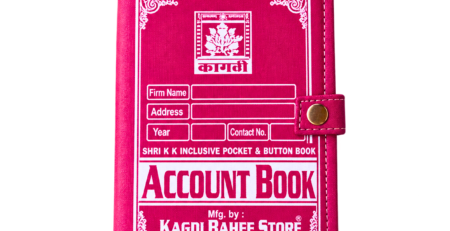
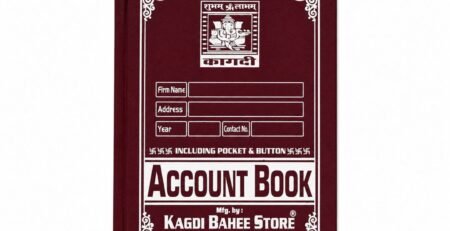
- For daily entries and registers, see our Account Book range — single and folding khata, registers, copy books.
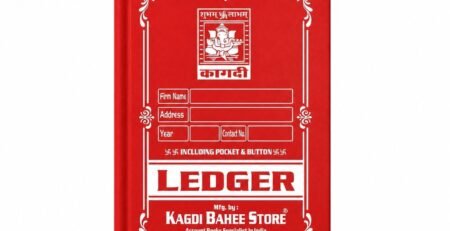
- For name-wise accounts, see the Ledger Register range.
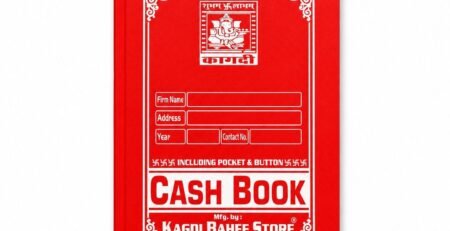
- For shops that mostly handle cash in and cash out, a Cash Book Canvas Copy Size 6×8 Inch or the larger Cash Book Canvas Full Size 17 x 28 Inch 107gms(BUILT PAPER) | Business Accounting & Bahi Khata Register Book keeps the day’s cash in one place.
- If you want the size and the strength of a full register with a hard tich button binding, the 22 x 29 Ruled Tich Button Register 6 x 14 Inch | Account Book is a common choice.
A simple way to start
Write today’s entries in the bahi khata before you shut the shutter. Once a week, sit with the ledger and post every credit entry. That is the whole system — two books, five minutes a day, and no argument at the end of the year about what was owed or spent.
You can see the full range on our shop page, with the exact inches and ruling on every product so you know what you are ordering.